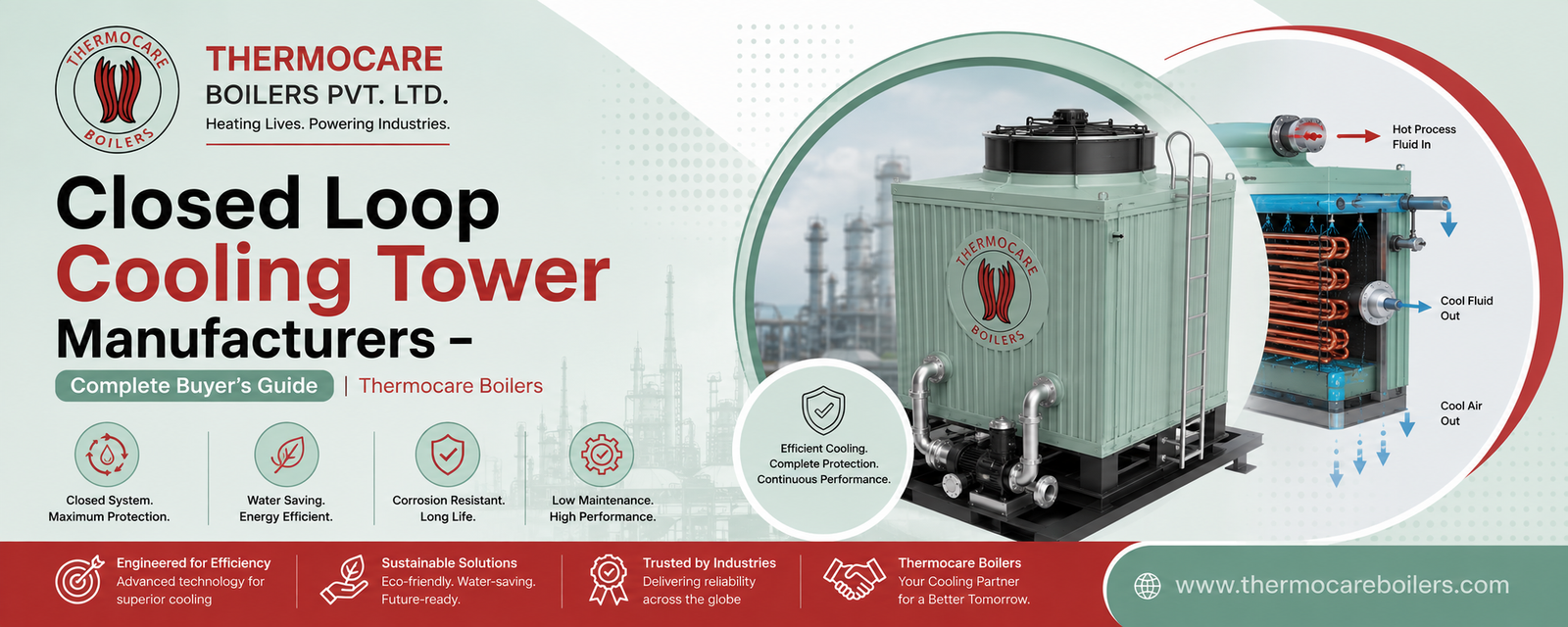
A closed loop cooling tower keeps the process fluid sealed inside a coil while spray water and air cool it from the outside, so the fluid never contacts the atmosphere. This keeps it clean and protects downstream equipment from fouling and corrosion.
This guide explains how closed loop cooling works, its main benefits, when it beats an open system, and how to choose the right closed loop cooling tower manufacturer for your plant.
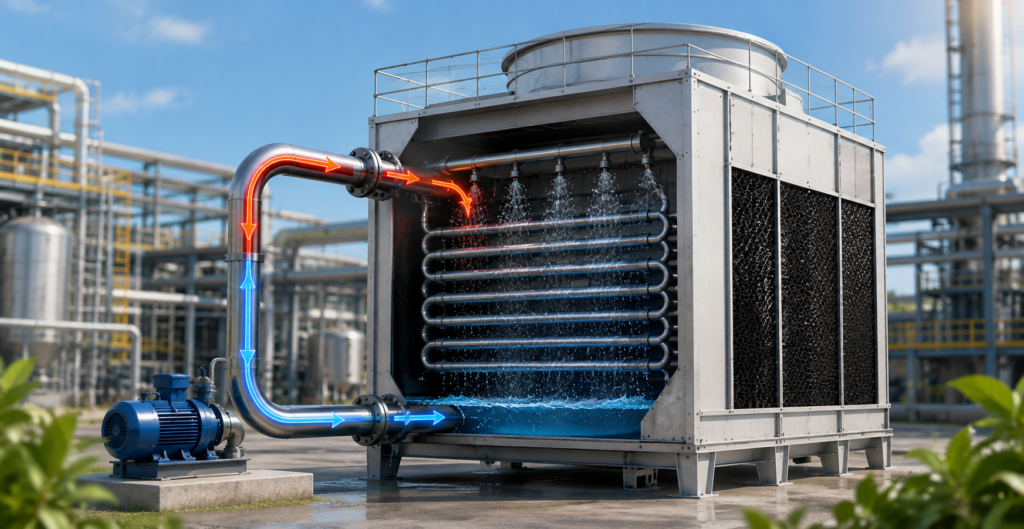
A closed loop cooling tower — also known as a closed circuit cooling tower or evaporative fluid cooler — circulates the process fluid through a sealed coil bundle. An external circuit sprays water over the coil while a fan pulls air through, rejecting heat to the atmosphere by evaporation. The process fluid itself stays inside the coil and never mixes with the spray water or air.
The result is a clean, protected cooling loop. Because no dust, debris, or airborne contaminants reach the process fluid, the equipment it cools — chillers, condensers, furnaces, and heat exchangers — stays free of fouling and scaling for longer.
|
Feature |
Closed Loop |
Open Loop |
|---|---|---|
|
Fluid exposure |
Sealed in coil |
Open to air |
|
Cleanliness |
Contaminant-free |
Exposed to debris |
|
Equipment protection |
High |
Lower |
|
Winter operation |
Easier (glycol/dry) |
Freeze risk |
|
Initial cost |
Higher |
Lower |
|
Best for |
Critical, clean-fluid duties |
General water cooling |
Structured to win a comparison featured snippet for 'closed loop vs open loop cooling tower.'
As experienced closed circuit (closed loop) cooling tower manufacturers, Thermocare Boilers designs corrosion-resistant, custom-sized closed-loop cooling towers backed by full after-sales support. To explore models and specifications, visit our closed circuit cooling tower manufacturers page or contact our engineering team for a tailored recommendation.