Closed Loop Cooling Tower Manufacturers: A Complete Buyer's Guide

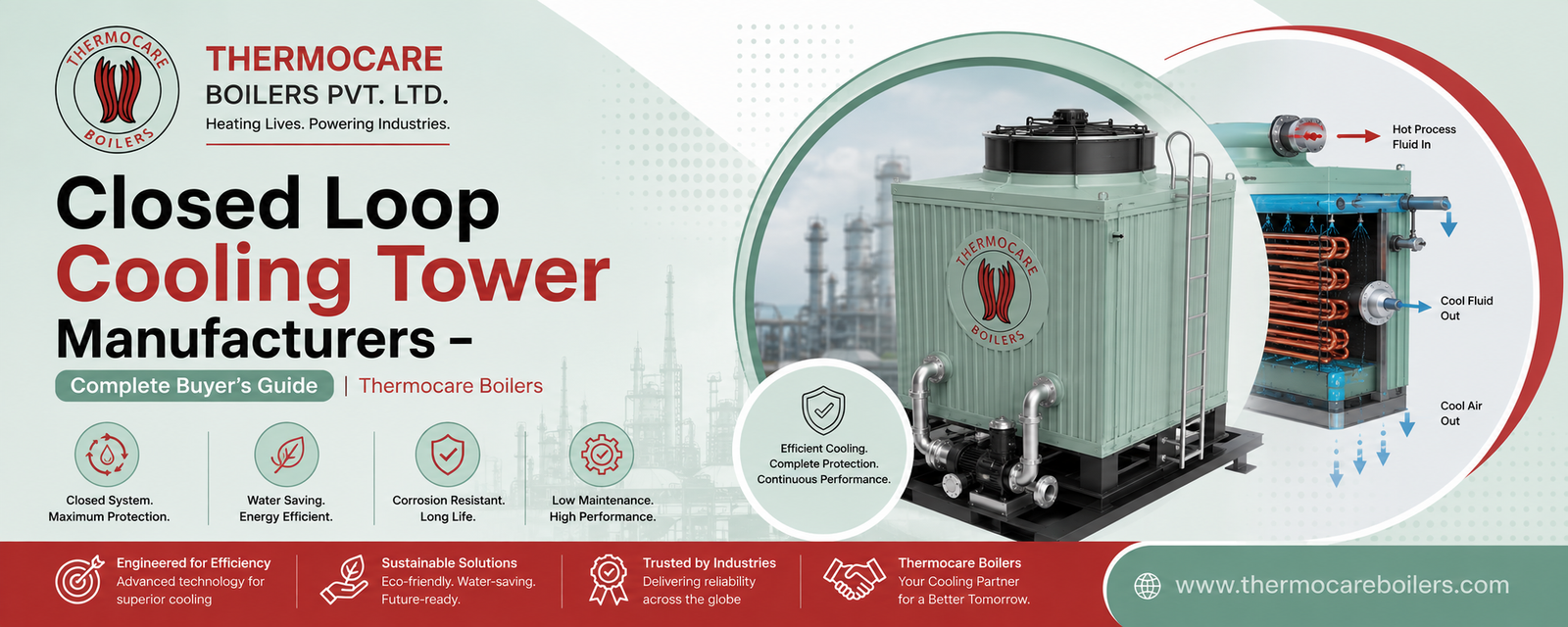
A closed loop cooling tower keeps the process fluid sealed inside a coil while spray water and air cool it from the outside, so the fluid never contacts the atmosphere. This keeps it clean and protects downstream equipment from fouling and corrosion.

This guide explains how closed loop cooling works, its main benefits, when it beats an open system, and how to choose the right closed loop cooling tower manufacturer for your plant.
What Is a Closed Loop Cooling Tower?

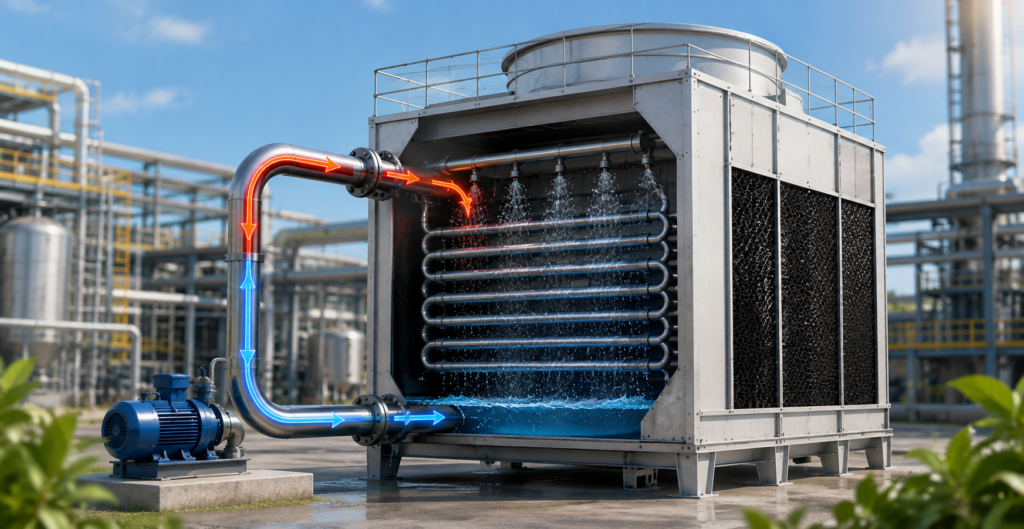
A closed loop cooling tower — also known as a closed circuit cooling tower or evaporative fluid cooler — circulates the process fluid through a sealed coil bundle. An external circuit sprays water over the coil while a fan pulls air through, rejecting heat to the atmosphere by evaporation. The process fluid itself stays inside the coil and never mixes with the spray water or air.

The result is a clean, protected cooling loop. Because no dust, debris, or airborne contaminants reach the process fluid, the equipment it cools — chillers, condensers, furnaces, and heat exchangers — stays free of fouling and scaling for longer.

Benefits of Closed Loop Cooling Towers

  • Clean, contaminant-free process fluid
  • Protects downstream equipment from fouling and corrosion
  • Lower maintenance and longer equipment life
  • Works with chillers, heat pumps, and closed-loop systems
  • Freeze protection via glycol or dry operation in cold weather
  • Reliable, consistent cooling for critical processes

Closed Loop vs Open Loop Cooling Tower

Feature

Closed Loop

Open Loop

Fluid exposure

Sealed in coil

Open to air

Cleanliness

Contaminant-free

Exposed to debris

Equipment protection

High

Lower

Winter operation

Easier (glycol/dry)

Freeze risk

Initial cost

Higher

Lower

Best for

Critical, clean-fluid duties

General water cooling

Structured to win a comparison featured snippet for 'closed loop vs open loop cooling tower.'

When to Choose a Closed Loop Cooling Tower

  • When the cooled fluid must stay clean (sensitive processes)
  • For chiller, heat pump, and induction/furnace cooling
  • In cold climates needing freeze protection
  • When you want to minimise equipment fouling and downtime
  • Where long-term reliability outweighs lower upfront cost

How to Choose a Closed Loop Cooling Tower Manufacturer

  • Look for corrosion-resistant coil and casing construction
  • Check that units are sized to your fluid, flow, and wet-bulb data
  • Prefer manufacturers offering custom engineering and after-sales support
  • Confirm freeze-protection options for your climate
  • Consider total cost of ownership, not just purchase price
  • Choose an experienced supplier with strong service backing

Closed Loop Cooling with Thermocare Boilers

As experienced closed circuit (closed loop) cooling tower manufacturers, Thermocare Boilers designs corrosion-resistant, custom-sized closed-loop cooling towers backed by full after-sales support. To explore models and specifications, visit our closed circuit cooling tower manufacturers page or contact our engineering team for a tailored recommendation.

Frequently Asked Questions

What is a closed loop cooling tower?

A closed loop cooling tower circulates the process fluid through a sealed coil while spray water and air cool it from the outside, so the fluid stays clean and never contacts the atmosphere.

Is a closed loop cooling tower the same as a closed circuit cooling tower?

Yes. 'Closed loop' and 'closed circuit' cooling tower refer to the same equipment, also known as an evaporative fluid cooler, where the process fluid is sealed inside a coil.

What are the benefits of a closed loop cooling tower?

Benefits include clean contaminant-free fluid, protection of downstream equipment from fouling, lower maintenance, longer equipment life, and easier winter operation with freeze protection.

When should I use a closed loop cooling tower?

Use one when the cooled fluid must stay clean for chillers, heat pumps, induction and furnace cooling — or in cold climates and critical processes where reliability matters.

Can closed loop cooling towers handle freezing weather?

Yes. Adding glycol for freeze protection or running in dry mode at low ambient temperatures allows closed loop cooling towers to operate reliably in cold conditions.

Are closed loop cooling towers more expensive than open ones?

They usually have a higher initial cost, but the cleaner fluid reduces equipment fouling and maintenance, often lowering total cost of ownership over time.

How do I choose a closed loop cooling tower manufacturer?

Look for corrosion-resistant construction, correct sizing to your data, custom engineering, freeze-protection options, strong after-sales support, and good total cost of ownership.

What industries use closed loop cooling towers?

They are used in HVAC, chemical, pharmaceutical, food and beverage, power, and metalworking industries wherever clean, protected cooling fluid is needed.

Does Thermocare Boilers manufacture closed loop cooling towers?

Yes. Thermocare Boilers manufactures closed circuit (closed loop) cooling towers in India, custom-sized and corrosion-resistant, with full after-sales support.